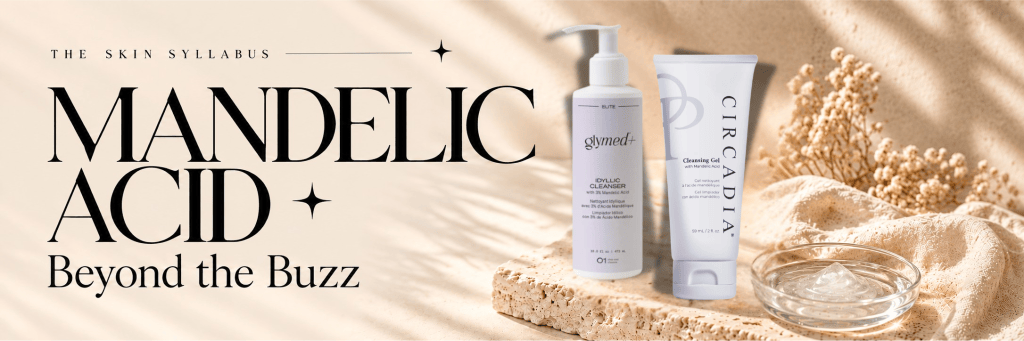
If you’ve ever tried a glycolic toner and felt like your face was on fire, someone has probably told you to try mandelic acid instead. It’s earned a spot on nearly every “gentle exfoliant” list, and for good reason. But “gentle” doesn’t mean “does nothing,” and it doesn’t mean it’s right for everyone. Let’s look at what makes this acid different and where it really earns its place.
What is Mandelic Acid
Mandelic acid is an alpha hydroxy acid (AHA), the same family as glycolic and lactic acid. It was first isolated from bitter almonds (the name comes from the German word for almond), though the mandelic acid in skincare today is typically made in a lab for purity and consistency.
Like other AHAs, it loosens the connections between dead cells on the skin’s surface so they shed more evenly. The result is smoother texture, more even tone and a brighter look over time.
Why it Behaves Differently: Size and Structure
Two features set mandelic acid apart from its AHA cousins:
- It’s a bigger molecule. Mandelic acid is roughly twice the molecular weight of glycolic acid. Larger molecules move into the skin more slowly and more evenly, which is a big part of why many people feel less stinging and redness with it.
- It has a ring-shaped (phenyl) group attached that makes it a bit more oil-compatible than typical water-loving AHAs, which is one reason it’s popular for oily and acne-prone skin. Some research also points to antibacterial activity, although it isn’t a replacement for proven acne treatments.
A quick nerd note: “slower” isn’t automatically “weaker.” How strong any acid product feels depends on its concentration, its pH and how it’s formulated. A low-pH mandelic product can still irritate, and a well-buffered glycolic can be quite comfortable. The molecule gives mandelic a head start on gentleness; the formula decides the rest.
What the Research Shows
Most of the published clinical data on mandelic acid comes from professional peels, not everyday serums, and many of the studies are small. With that caveat, here’s the picture:
- Acne: In a randomized comparison published in the Journal of Cosmetic Dermatology, a 45% mandelic acid peel performed about as well as a 30% salicylic acid peel for mild to moderate acne and was well tolerated. Another trial found a salicylic–mandelic combination peel improved inflammatory acne and post-acne dark marks at least as well as a 35% glycolic peel.
- Melasma and Dark Marks: Several small studies suggest mandelic peels can help lighten hyperpigmentation, with results comparable to glycolic peels in some trials and fewer side effects in others. Melasma is stubborn and tends to return, so these results depend heavily on sunscreen and ongoing care.
- Texture and Photoaging: The evidence here is thinner than it is for glycolic acid or retinoids. Mandelic can make skin feel smoother, but it isn’t the strongest tool for deeper lines.
Who it May Suit
- Sensitive or easily irritated skin that doesn’t tolerate smaller AHAs well (though very reactive skin, rosacea or eczema should check with a professional first)
- Oily, congested or acne-prone skin, often alongside other acne care
- Skin prone to dark marks after breakouts, including many deeper skin tones, where slower, less irritating exfoliation lowers the risk that the irritation itself creates new pigment
- AHA beginners looking for a softer first step
Who should take extra care: anyone using prescription retinoids or other strong actives, people with a compromised or recovering barrier, and anyone who is pregnant or breastfeeding and wants to check their full routine with their provider.
How to Use it at Home
- Patch test first on a small area for a few days.
- Start two to three times a week, at night, and increase only if your skin stays calm.
- Don’t stack exfoliants. Avoid pairing it with retinoids, other acids or scrubs on the same night, especially at the start.
- Follow with a barrier-supporting moisturizer. Ingredients like ceramides, glycerin and niacinamide pair well.
- Wear broad-spectrum sunscreen daily. The FDA notes AHAs can increase your skin’s sensitivity to the sun, and that effect can linger for about a week after you stop. At Utah’s altitude, don’t skip this one.
- Stop if you see persistent stinging, redness, tightness or flaking. That’s your barrier asking for a break.
In the Treatment Room
Professionally, mandelic acid shows up in peels on its own or blended with salicylic or lactic acid, often for clients who want results with less visible downtime. Like other AHAs, a mandelic peel is timed and neutralized, and its strength is matched to the client. It’s also a helpful way to prep skin before a series of stronger treatments or to keep results going between them.
Common Myths
- “It’s so gentle you can use it every day with anything.” Over-exfoliating with a gentle acid is still over-exfoliating.
- “It’s a natural almond extract.” The almond story is history; what’s in your bottle is a purified acid.
- “It works faster than glycolic.” It usually works more gently, which can mean steadier progress, not faster.
The Takeaway
Mandelic acid isn’t the most aggressive acid on the shelf, and that’s exactly why it’s useful. For sensitive, acne-prone or pigment-prone skin, slow and steady exfoliation can deliver real improvement while keeping your barrier happy. If you’re dealing with acne, melasma or stubborn dark marks, a consultation can help you decide whether a home product, a professional peel series, or both makes sense for you.
Sources
- Dayal S, et al. Comparative study of efficacy and safety of 45% mandelic acid versus 30% salicylic acid peels in mild-to-moderate acne vulgaris. Journal of Cosmetic Dermatology, 2020
- Comparative Study of 35% Glycolic Acid, 20% Salicylic–10% Mandelic Acid, and Phytic Acid Combination Peels in the Treatment of Active Acne and Postacne Pigmentation (PMC)
- Comparative Evaluation of Efficacy and Tolerability of Glycolic Acid, Salicylic Mandelic Acid, and Phytic Acid Combination Peels in Melasma. Dermatologic Surgery, 2016 (PubMed)
- Alpha Hydroxy Acids – U.S. Food and Drug Administration
Further reading: Cosmetic Dermatology: Products and Procedures, edited by Zoe Diana Draelos; Chemical Peels (Procedures in Cosmetic Dermatology series), edited by Suzan Obagi; Skincare Decoded by Victoria Fu and Gloria Lu.
This lesson is for general education and is not a substitute for a personalized consultation with a licensed skin professional or a medical provider.


Leave a comment